
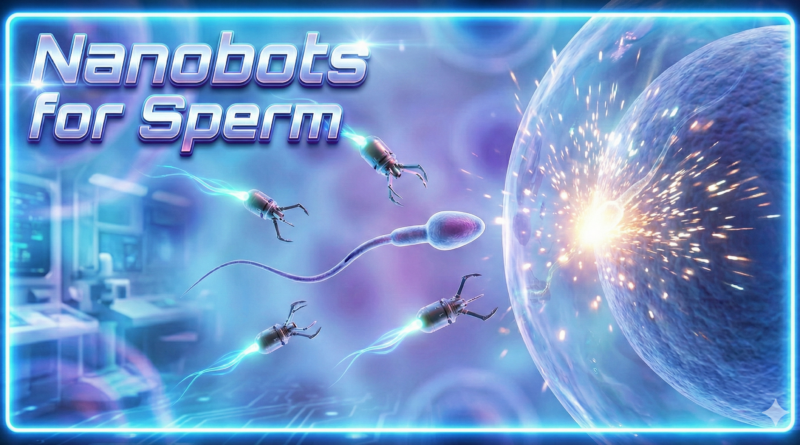
Nanobots Are Changing Fertility Science
Medical science is entering a new phase with the development of microscopic nanobots designed to assist in fertility treatments. These tiny machines help immobile or weak sperm reach an egg by physically guiding them, offering hope to individuals facing biological infertility. Unlike genetic engineering, this technology does not modify DNA. It simply provides mechanical support, similar in principle to In Vitro Fertilization (IVF).
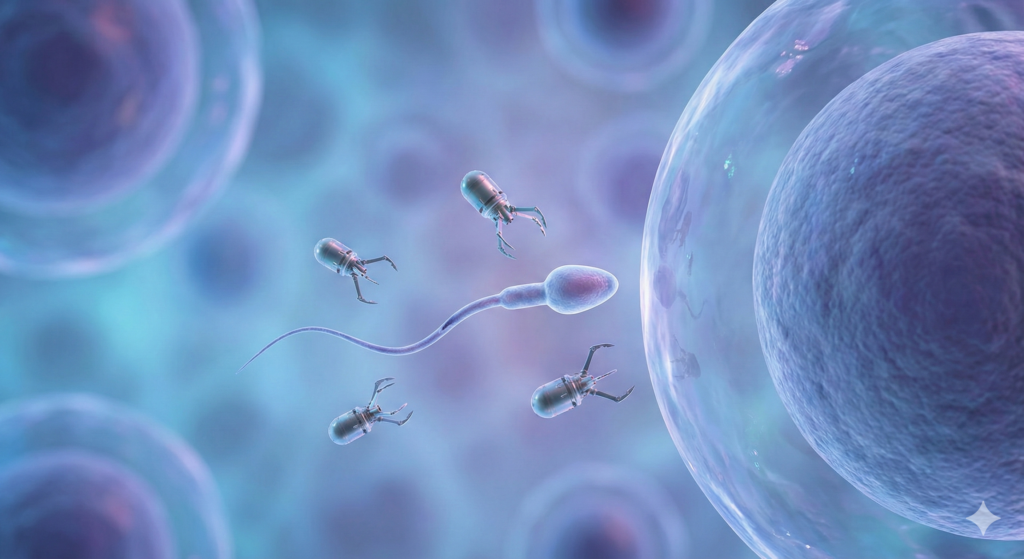
Experts explain that low sperm motility does not automatically mean poor genetic quality. The DNA inside a sperm cell can remain perfectly healthy even when movement is impaired. Nanobots function as transport tools, not genetic filters, helping sperm overcome physical limitations without altering the future child’s biology.
Public reaction has been mixed. Many people express excitement over the potential to treat infertility more effectively, while others worry that such technology interferes with natural selection. Medical professionals counter this by noting that modern medicine has long bypassed natural barriers, from IVF to organ transplants, without harming human evolution.
Another major concern is access. Advanced reproductive technologies are expensive, leading to fears of a future where fertility assistance becomes a luxury reserved for the wealthy. Critics argue that reproduction could shift from a biological process to an economic one, where financial power determines who can pass on their genes. This has sparked discussions about inequality, with some describing it as a system where wealth replaces natural fitness.

From a scientific perspective, the technology is possible due to extreme miniaturization. A human sperm cell is about 50 micrometers long, while modern computer components measure just a few nanometers. This size difference allows scientists to build micromotors small enough to interact directly with individual cells, acting as a guided vehicle for sperm that lack the energy to move on their own.
Energy plays a critical role in fertility. Sperm rely on enzymes like aldolase to generate the fuel needed for movement. When this energy system fails, fertilization becomes difficult. Interestingly, researchers believe blocking this enzyme could lead to new male contraceptives, while enhancing or bypassing it opens doors for fertility treatments.
At the exact moment fertilization occurs, the egg releases billions of zinc ions in a phenomenon known as the zinc spark. This microscopic flash of light confirms successful fertilization and helps scientists identify viable eggs, marking the precise beginning of new life.
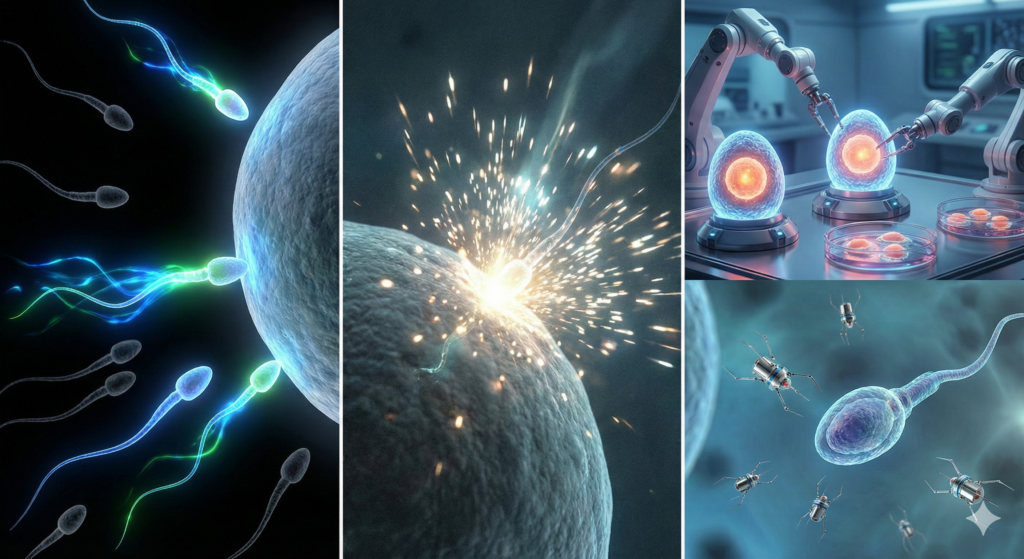
As nanobots, artificial eggs, and lab grown cells move closer to real world use, infertility is increasingly viewed as an engineering challenge rather than a permanent limitation. The future of reproduction may not be about changing human genetics, but about removing physical barriers that once made parenthood impossible.


 English
 Afrikaans
 Shqip
Shqip አማርኛ
አማርኛ العربية
 Հայերեն
 Azərbaycan dili
 Euskara
 Беларуская мова
 বাংলা
বাংলা Bosanski
 Български
 Català
 Cebuano
 Chichewa
 简体中文
简体中文 繁體中文
繁體中文 Corsu
Corsu Hrvatski
 Čeština
 Dansk
Dansk Nederlands
 Esperanto
 Eesti
Eesti Filipino
 Suomi
Suomi Français
 Frysk
Frysk Galego
 ქართული
 Deutsch
 Ελληνικά
 ગુજરાતી
 Kreyol ayisyen
 Harshen Hausa
 Ōlelo Hawaiʻi
 עִבְרִית
 हिन्दी
 Hmong
Hmong Magyar
 Íslenska
 Igbo
Igbo Bahasa Indonesia
 Gaelige
 Italiano
 日本語
日本語 Basa Jawa
 ಕನ್ನಡ
ಕನ್ನಡ Қазақ тілі
 ភាសាខ្មែរ
 한국어
한국어 كوردی
كوردی Кыргызча
 ພາສາລາວ
 Latin
Latin Latviešu valoda
 Lietuvių kalba
 Lëtzebuergesch
 Македонски јазик
 Malagasy
 Bahasa Melayu
 മലയാളം
 Maltese
 Te Reo Māori
 मराठी
मराठी Монгол
 ဗမာစာ
ဗမာစာ नेपाली
 Norsk bokmål
 پښتو
پښتو فارسی
فارسی Polski
 Português
 ਪੰਜਾਬੀ
 Română
 Русский
 Samoan
 Gàidhlig
 Српски језик
 Sesotho
 Shona
Shona سنڌي
سنڌي සිංහල
සිංහල Slovenčina
 Slovenščina
 Afsoomaali
 Español
 Basa Sunda
 Kiswahili
 Svenska
 Тоҷикӣ
 தமிழ்
தமிழ் తెలుగు
 ไทย
ไทย Türkçe
 Українська
 اردو
اردو O‘zbekcha
 Tiếng Việt
 Cymraeg
 isiXhosa
 יידיש
יידיש Yorùbá
 Zulu
Zulu