
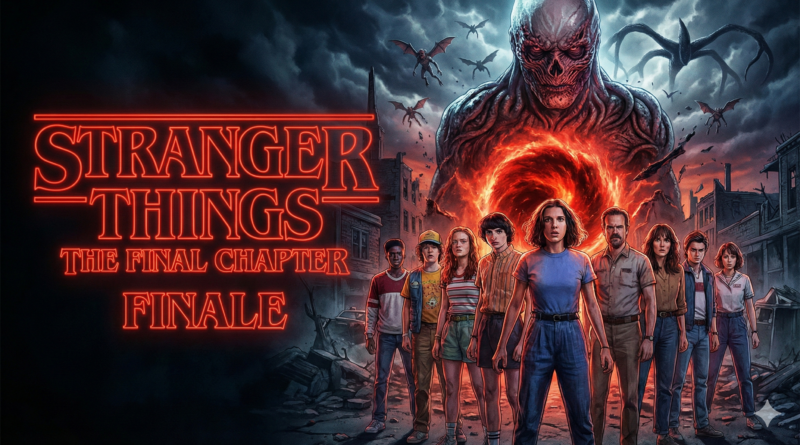
Stranger Things Series Finale Sparks Massive Fan Divide on Reddit (Spoilers Ahead)
⚠️ Spoiler Warning: This article contains major spoilers for the Stranger Things series finale.
A popular Reddit discussion thread has ignited intense debate among fans following the series finale of Netflix’s Stranger Things. Viewer reactions span from overwhelming emotional praise to sharp criticism, revealing a deeply polarized fandom. While many applauded the finale’s emotional weight, character resolutions, and performances, others condemned it as underwhelming, citing unresolved plot threads, minimal stakes, and what they perceived as a safe, risk-averse ending.
Common complaints focused on the abrupt defeat of major threats like Vecna and the Mind Flayer, the absence of meaningful character deaths, and the ambiguous fate of Eleven. Supporters, however, embraced the finale’s optimism, celebrating the happy endings for the core group and the show’s nostalgic return to its Season 1 roots. Ultimately, fans remain divided over whether the finale delivered a satisfying conclusion or amounted to a rushed and cautious “cop-out.”
Eleven’s Fate: Emotional Ambiguity or Narrative Escape Hatch?
The most divisive element of the finale is unquestionably Eleven’s ultimate fate, which the show deliberately leaves open to interpretation. This ambiguity has become the focal point of both praise and criticism.
The Ambiguity of Eleven’s Ultimate Fate
The finale presents what many fans have dubbed a “choose your own adventure” ending:
- Open-Ended Resolution: Some viewers appreciated the lack of a definitive answer, arguing that the ambiguity allows audiences to decide whether Eleven survived or died. Many described this creative choice as an intentional homage to an ’80s storytelling vibe.
- Mike’s Storyteller Theory: A key scene features Mike narrating an alternate scenario during a final D&D session, implying that Eleven may have escaped. Supporters saw this as a hopeful “sliver of light,” while critics interpreted it as Mike crafting a fantasy to cope with grief, suggesting Eleven is truly gone.
- Symbolic Visual Clues: Fans noted subtle details, such as Eleven’s lab numbers no longer being visible on her wrist, interpreting this as symbolism that she is no longer defined as an experiment—whether in life or in memory.
- The Military Plotline: Several commenters expressed frustration that the military arc appeared designed solely to justify Eleven’s sacrifice. Many felt her decision to give herself up—on the basis that the military would never stop hunting her—rang hollow given her long history of evading them.

Thematic Resolution: Sacrifice, Trauma, and Coming of Age
From a thematic perspective, Eleven’s ending is viewed through the lens of sacrifice, loss, and emotional maturity:
- The Weight of Sacrifice: Some fans felt Eleven and her sister Kali were the only characters to suffer lasting consequences, while the rest of the cast received happy endings. This imbalance struck many as tragic.
- Joyce vs. Eleven: A recurring criticism was that Joyce delivering the final blow to Vecna felt like a “slap in the face” to Eleven’s arc, with viewers arguing that the protagonist should have completed her own journey.
- Acceptance and Grief: Hopper’s dialogue about accepting Eleven’s choice resonated strongly with some viewers dealing with loss, reinforcing the idea that moving forward is necessary even when pain remains.
- Nostalgic Closure: The final D&D game was widely praised for bringing the story full circle, reinforcing the show’s original coming-of-age themes from Season 1.
In effect, Eleven’s fate functions as a Schrödinger’s Cat of television endings—she is simultaneously alive and dead, depending entirely on the viewer’s emotional needs.:max_bytes(150000):strip_icc():focal(999x0:1001x2)/stranger-things-season-5-finale-123025-6-efba8bb096594e389962e196602caf12.jpg)
The Steve–Jonathan Fakeout: Purpose Over Believability
The controversial Steve and Jonathan “takeout” scene, where Steve falls from a tower and is saved at the last moment, drew mixed reactions.
Why the Scene Exists
- Resolving Their Conflict: The moment served as a clean way to finally end the long-standing tension between Steve and Jonathan, allowing them to reconcile without prolonged dialogue.
- A Heroic Bridge: Jonathan saving Steve’s life acted as a literal and symbolic bridge, closing years of awkward rivalry.
Meta-Narrative Impact
- Confirmation of Plot Armor: Many viewers admitted that once Steve survived the fall, they immediately realized no main character was in real danger.
- Lowered Stakes: The fakeout eliminated tension for the remainder of the finale, with some fans pinpointing this exact moment as when they knew no one would die.
Audience Reaction
- Cinema Experience: Despite narrative criticisms, the scene reportedly worked extremely well in theaters, with audiences audibly reacting when Jonathan was revealed as Steve’s savior.
- Criticism: Others dismissed the moment as predictable, unrealistic, and emblematic of the writers’ reluctance to take risks.
Ultimately, the scene functioned as a narrative reset button, forcing reconciliation and allowing the group to move forward united.
Joyce’s Final Blow to Vecna: Justice or Missed Opportunity?
According to fan discussions, Joyce ultimately defeats Vecna by decapitating him with an axe, a moment that split the audience.
- A Moment of Justice: Supporters praised the scene as a powerful montage symbolizing a mother’s love and strength, delivering justice for the children harmed throughout the series.
- Narrative Backlash: Critics argued the moment felt unearned, as Joyce had limited involvement in the final battle until the end.
- Wasted Potential: Some fans suggested the scene could have carried more weight if Joyce had referenced Henry’s past or broader lore. Others felt the entire final confrontation was anti-climactic, lasting only minutes.
While Joyce delivered the physical killing blow, the thematic ownership of Vecna’s defeat remains hotly contested.

Final Battle: Spectacle Without Consequences
The finale’s climactic showdown earned praise for its cinematic scale, particularly in theater screenings, but criticism for its lack of danger:
- Ease of Victory: Fans described the final fight as “child’s play,” noting the absence of injuries or sacrifices.
- Missing Creatures: The lack of Demogorgons or Demodogs during the finale made the villains feel underpowered compared to earlier seasons.
- Plot Armor Concerns: The survival of every major character reinforced claims that the writers prioritized comfort over realism.
Unanswered Questions and Narrative Cop-Outs
The finale left several plot threads unresolved, fueling accusations of lazy or safe writing:
- The disappearance of Dr. Kay and the military
- The unexplained evil seed in the briefcase
- The fate of the pregnant women in the base
- Why Hawkins alone experienced the world-merging events
For many fans, these gaps undermined the show’s once-gritty mythology.
Conclusion: Emotional Closure at the Cost of Risk
The Stranger Things series finale delivers a nostalgic, emotionally resonant send-off, prioritizing character bonds and sentimental closure over high-stakes storytelling. For viewers seeking warmth, familiarity, and hopeful endings, it succeeds. For those expecting bold narrative risks and concrete answers, it falls short.
In the end, the finale resembles a long-running D&D campaign where the Dungeon Master ensures everyone survives the final boss. The journey and friendships remain deeply rewarding—even if the victory feels a little too safe to be truly legendary.


 English
 Afrikaans
 Shqip
Shqip አማርኛ
አማርኛ العربية
 Հայերեն
 Azərbaycan dili
 Euskara
 Беларуская мова
 বাংলা
বাংলা Bosanski
 Български
 Català
 Cebuano
 Chichewa
 简体中文
简体中文 繁體中文
繁體中文 Corsu
Corsu Hrvatski
 Čeština
 Dansk
Dansk Nederlands
 Esperanto
 Eesti
Eesti Filipino
 Suomi
Suomi Français
 Frysk
Frysk Galego
 ქართული
 Deutsch
 Ελληνικά
 ગુજરાતી
 Kreyol ayisyen
 Harshen Hausa
 Ōlelo Hawaiʻi
 עִבְרִית
 हिन्दी
 Hmong
Hmong Magyar
 Íslenska
 Igbo
Igbo Bahasa Indonesia
 Gaelige
 Italiano
 日本語
日本語 Basa Jawa
 ಕನ್ನಡ
ಕನ್ನಡ Қазақ тілі
 ភាសាខ្មែរ
 한국어
한국어 كوردی
كوردی Кыргызча
 ພາສາລາວ
 Latin
Latin Latviešu valoda
 Lietuvių kalba
 Lëtzebuergesch
 Македонски јазик
 Malagasy
 Bahasa Melayu
 മലയാളം
 Maltese
 Te Reo Māori
 मराठी
मराठी Монгол
 ဗမာစာ
ဗမာစာ नेपाली
 Norsk bokmål
 پښتو
پښتو فارسی
فارسی Polski
 Português
 ਪੰਜਾਬੀ
 Română
 Русский
 Samoan
 Gàidhlig
 Српски језик
 Sesotho
 Shona
Shona سنڌي
سنڌي සිංහල
සිංහල Slovenčina
 Slovenščina
 Afsoomaali
 Español
 Basa Sunda
 Kiswahili
 Svenska
 Тоҷикӣ
 தமிழ்
தமிழ் తెలుగు
 ไทย
ไทย Türkçe
 Українська
 اردو
اردو O‘zbekcha
 Tiếng Việt
 Cymraeg
 isiXhosa
 יידיש
יידיש Yorùbá
 Zulu
Zulu