
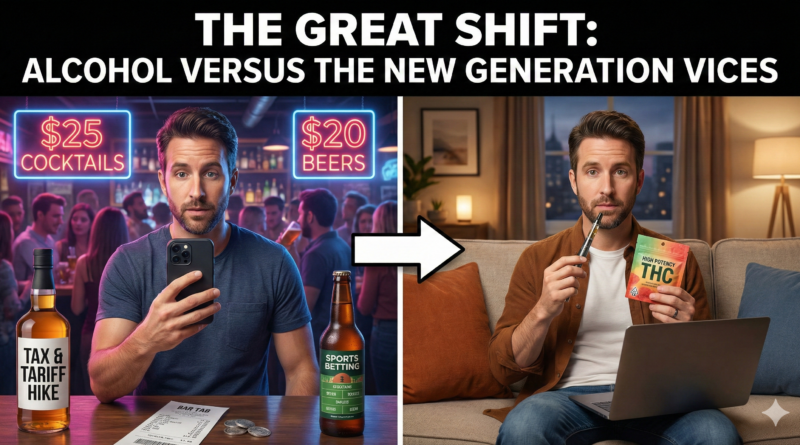
The Great Shift: Alcohol Versus the New Generation Vices
Alcohol is becoming less popular among younger generations, and the reasons go far beyond changing tastes. A growing number of people believe alcohol has simply become too expensive, too risky, and too out of sync with modern lifestyles. Instead of quitting substances altogether, many are choosing cheaper, more convenient alternatives or staying home altogether.
One of the biggest factors is cost. Drinking outside the home has become a luxury. A single beer at a bar or stadium can cost anywhere from $9 to over $20, while cocktails often reach $25. As companies push for constant profit growth, prices continue to rise while wages fail to keep up. What once felt affordable now feels wasteful, especially when basic needs already strain monthly budgets.
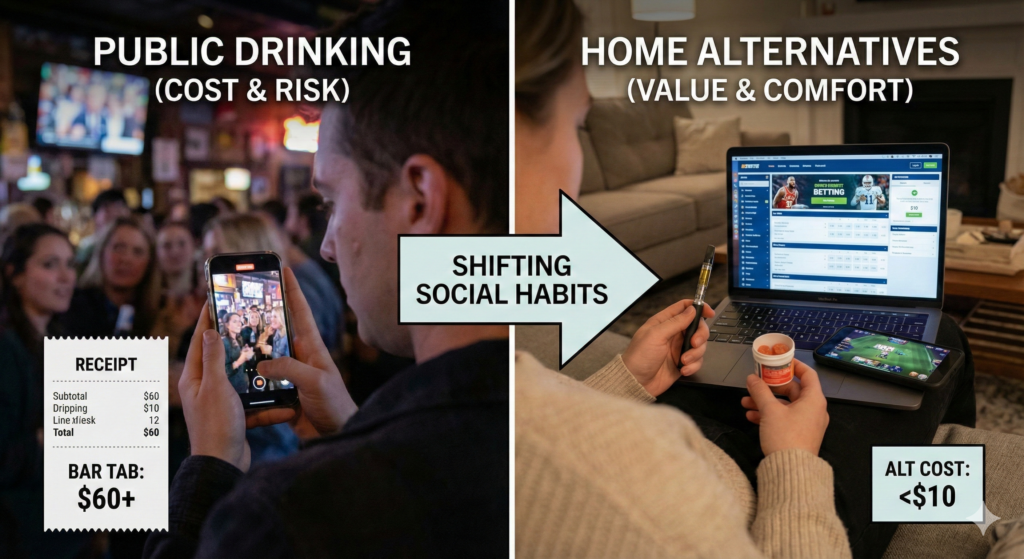
Because of this, many people are turning to substitutes that offer better value. Cannabis is often seen as a cheaper option, especially with products like vape pens or edibles that last longer than a night of drinking. Some users point out that a few dollars spent on weed can replace a night that would otherwise cost $60 or more in alcohol. Other alternatives like sports betting, online gambling, and nicotine pouches also compete for limited disposable income.
Social habits have changed as well. Smartphones and digital entertainment have reduced the need to go out. People can socialize, gamble, and stay entertained without leaving home. Bars no longer serve as the main social hub they once were. There is also growing discomfort around public drinking due to constant phone cameras, with many people afraid of embarrassing moments being recorded and shared online.
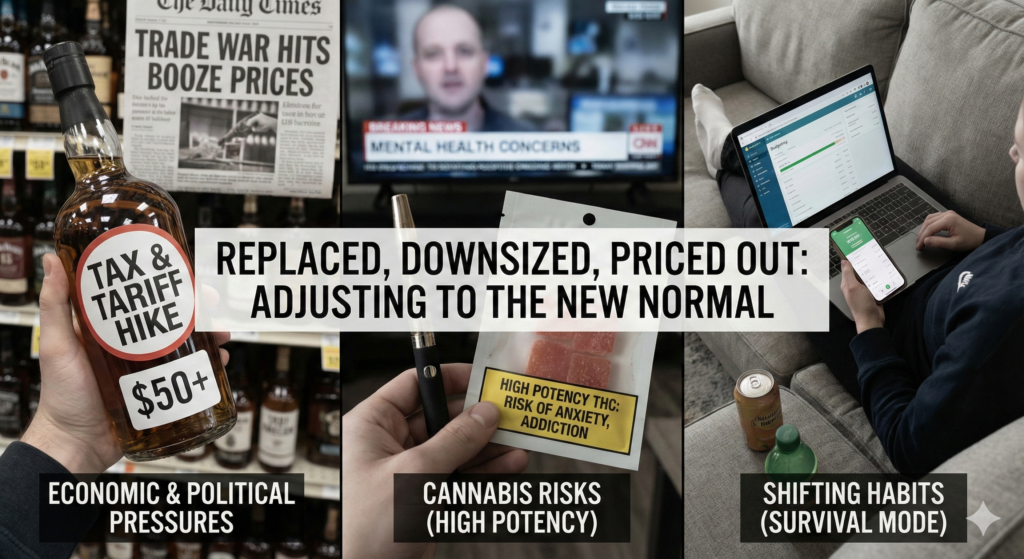
Financial pressure plays a major role here. Many individuals now rely on Buy Now Pay Later services for essentials like groceries, fuel, or food delivery. When people are financing necessities, expensive drinks become an easy thing to cut.
Larger economic and political pressures also affect the alcohol industry. Trade disputes, tariffs, and heavy sin taxes have driven prices even higher in some regions, pushing alcohol further out of reach.
While cannabis is often viewed as safer, concerns are growing around high-potency THC products. These can cause paranoia, mental health episodes, severe physical reactions, workplace accidents, and addiction. The risks highlight that younger generations are not necessarily choosing healthier paths, just different ones.
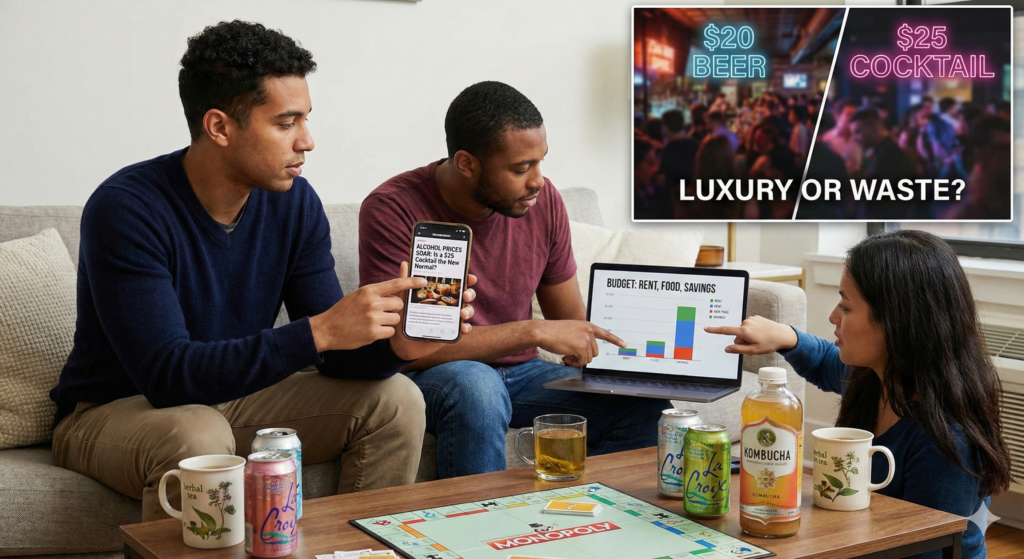
Overall, alcohol has not disappeared. It has simply been replaced, downsized, or priced out. Much like skipping a luxury car for a cheaper ride, people are adjusting their habits to survive in a world where everything costs more and social life increasingly happens behind a screen.


 English
 Afrikaans
 Shqip
Shqip አማርኛ
አማርኛ العربية
 Հայերեն
 Azərbaycan dili
 Euskara
 Беларуская мова
 বাংলা
বাংলা Bosanski
 Български
 Català
 Cebuano
 Chichewa
 简体中文
简体中文 繁體中文
繁體中文 Corsu
Corsu Hrvatski
 Čeština
 Dansk
Dansk Nederlands
 Esperanto
 Eesti
Eesti Filipino
 Suomi
Suomi Français
 Frysk
Frysk Galego
 ქართული
 Deutsch
 Ελληνικά
 ગુજરાતી
 Kreyol ayisyen
 Harshen Hausa
 Ōlelo Hawaiʻi
 עִבְרִית
 हिन्दी
 Hmong
Hmong Magyar
 Íslenska
 Igbo
Igbo Bahasa Indonesia
 Gaelige
 Italiano
 日本語
日本語 Basa Jawa
 ಕನ್ನಡ
ಕನ್ನಡ Қазақ тілі
 ភាសាខ្មែរ
 한국어
한국어 كوردی
كوردی Кыргызча
 ພາສາລາວ
 Latin
Latin Latviešu valoda
 Lietuvių kalba
 Lëtzebuergesch
 Македонски јазик
 Malagasy
 Bahasa Melayu
 മലയാളം
 Maltese
 Te Reo Māori
 मराठी
मराठी Монгол
 ဗမာစာ
ဗမာစာ नेपाली
 Norsk bokmål
 پښتو
پښتو فارسی
فارسی Polski
 Português
 ਪੰਜਾਬੀ
 Română
 Русский
 Samoan
 Gàidhlig
 Српски језик
 Sesotho
 Shona
Shona سنڌي
سنڌي සිංහල
සිංහල Slovenčina
 Slovenščina
 Afsoomaali
 Español
 Basa Sunda
 Kiswahili
 Svenska
 Тоҷикӣ
 தமிழ்
தமிழ் తెలుగు
 ไทย
ไทย Türkçe
 Українська
 اردو
اردو O‘zbekcha
 Tiếng Việt
 Cymraeg
 isiXhosa
 יידיש
יידיש Yorùbá
 Zulu
Zulu